Accessibility
Digital spaces must be available to everyone, yet the scale of exclusion remains high.
According to the World Health Organisation (WHO), approximately 16% of the global population—or 1 in 6 people—experiences significant disability. Despite this, research indicates that over 90% of the world’s leading websites still fail to meet basic accessibility standards.
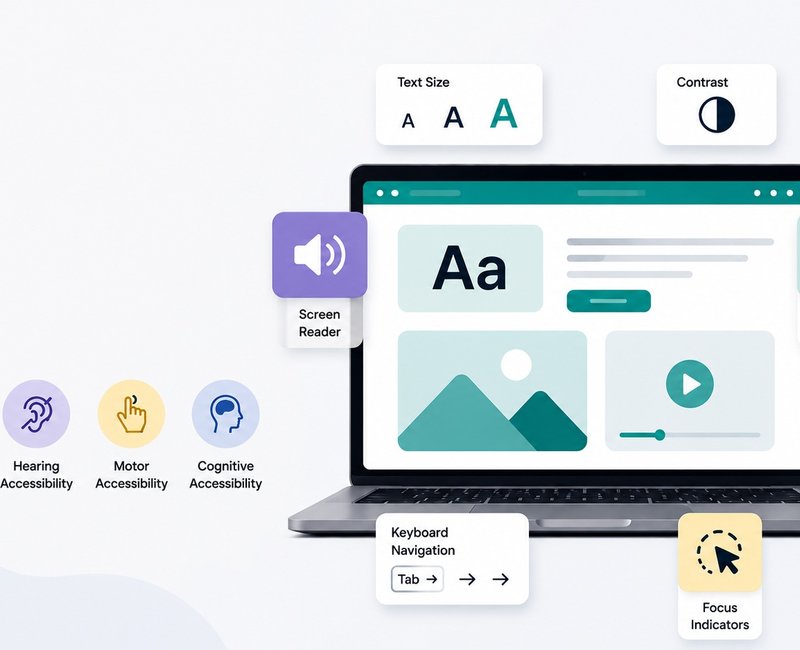
We believe that digital inclusion is a fundamental right, not an afterthought. Our work focuses on breaking down these barriers, from ensuring screen-reader compatibility to implementing inclusive design frameworks. By prioritising user-centred testing and ethical technology, we help you create digital environments where no one is left behind, ensuring your platforms are usable by the widest possible audience.